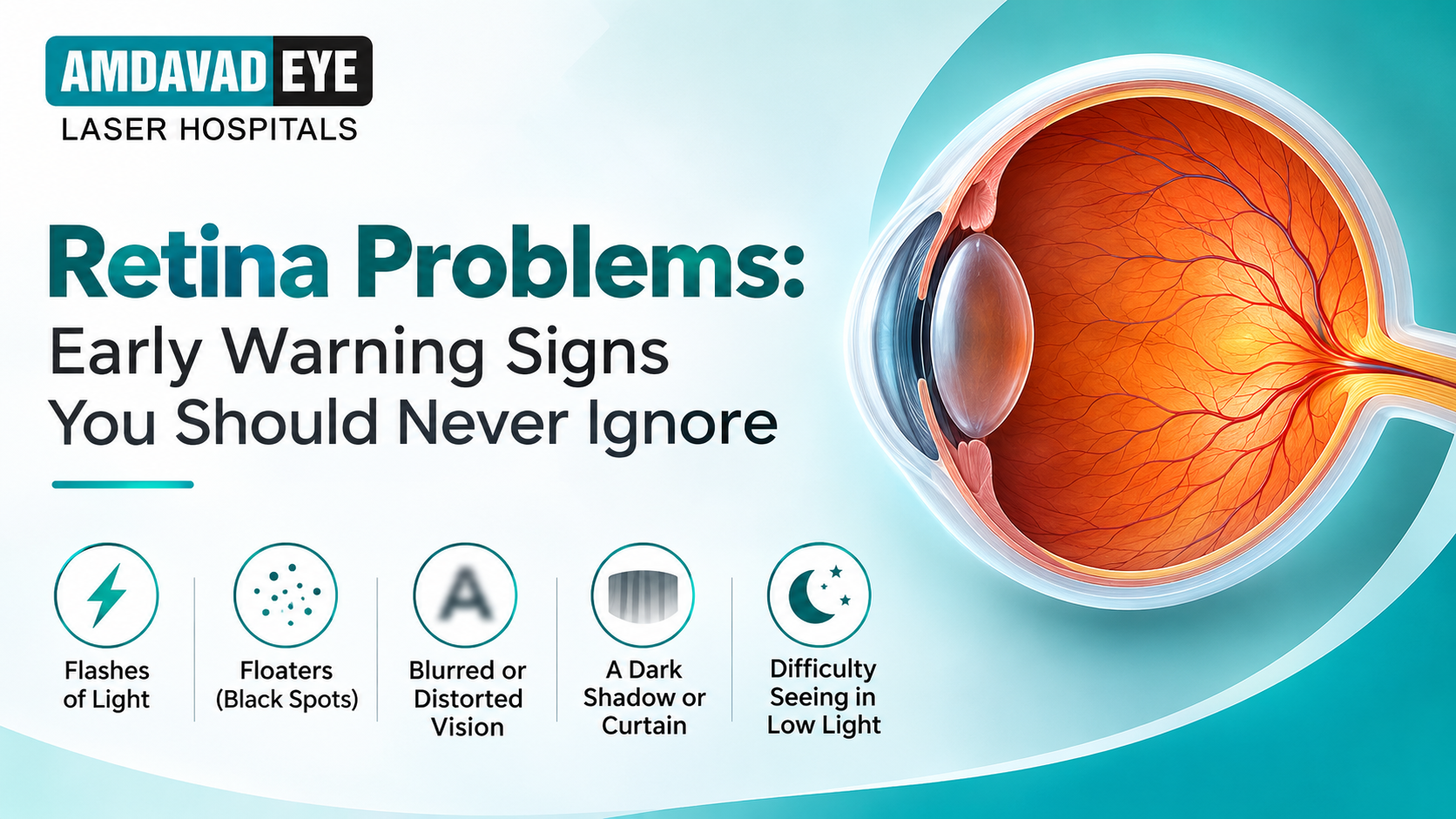
Retina Problems: Early Warning Signs You Should Never Ignore
Retina Problems: Early Warning Signs You Should Never Ignore
Your eyes help you experience the world, but some serious eye conditions can develop without pain or obvious symptoms. Retina problems are among the conditions that may affect your vision if they are not detected and treated in time.
Have you recently noticed sudden flashes of light, floating black spots, blurred vision, or difficulty seeing clearly? These changes could indicate a problem with your retina.
Understanding the early warning signs of retina problems can help you recognise when to seek medical attention and protect your eyesight.
What Is the Retina and Why Is It Important?
The retina is a thin, light-sensitive layer of tissue located at the back of your eye. It captures light and converts it into electrical signals that travel to your brain, allowing you to see.
A healthy retina plays an important role in:
- Clear central and peripheral vision
- Reading and recognising faces
- Identifying colours and details
- Seeing objects in different lighting conditions
When the retina becomes damaged due to diabetes, ageing, injury, or other eye conditions, your vision may be affected.
Some retinal diseases develop gradually, while others can cause sudden vision loss and require immediate medical attention.
Learn more about Medical Retina services at Amdavad Eye Laser Hospital.
7 Early Warning Signs of Retina Problems
1. Sudden Appearance of Flashes of Light
Do you notice brief flashes of light, especially at the side of your vision?
Flashes can occur when the vitreous gel inside your eye pulls on the retina. Although some flashes are associated with age-related changes, they can also indicate a retinal tear or retinal detachment.
When to seek help: New or sudden flashes should be assessed urgently by an ophthalmologist, particularly if they occur with new floaters or a shadow in your vision.
2. Black Spots or Floaters in Your Vision
Eye floaters may appear as small black dots, threads, cobwebs, or moving shadows.
While occasional floaters can be harmless, a sudden increase in their number may indicate bleeding inside the eye or a retinal tear.
Warning signs include:
- A sudden shower of black spots
- Multiple new floaters appearing together
- Floaters accompanied by flashes of light
- Sudden blurred or reduced vision
If these symptoms appear unexpectedly, seek an urgent dilated retinal examination.
3. Blurred or Distorted Vision
Blurred vision is a common symptom of several eye conditions, including retinal diseases.
You may notice that straight lines appear wavy, objects look distorted, or reading becomes difficult.
These symptoms may be associated with conditions affecting the macula, the central part of the retina responsible for detailed vision.
Conditions such as diabetic macular edema and age-related macular degeneration can affect central vision.
If your vision becomes persistently blurred or distorted, an eye examination can help identify the underlying cause.
4. A Dark Shadow or Curtain Over Your Vision
A dark shadow appearing across part of your visual field is a particularly serious warning sign.
Some people describe this sensation as a curtain moving across their eyesight.
This may indicate retinal detachment, a condition in which the retina separates from the underlying tissue.
Retinal detachment is a medical emergency. Without prompt treatment, it can lead to permanent vision loss.
Do not wait for the symptoms to disappear. Seek emergency ophthalmic care immediately.
5. Difficulty Seeing in Low Light
Have you started experiencing difficulty seeing in dimly lit rooms or while moving from bright to dark environments?
Night vision difficulties can have several causes, including certain retinal disorders.
Although difficulty seeing at night does not always indicate a retina problem, persistent changes should not be ignored.
An ophthalmologist can examine your eyes and determine whether the symptoms are related to the retina or another eye condition.
6. Loss of Central or Side Vision
Retinal diseases can affect different parts of your visual field.
Some conditions damage central vision, making it difficult to read, recognise faces, or see fine details. Others may cause missing areas or shadows in your peripheral vision.
For example:
- Macular degeneration primarily affects central vision.
- Retinal detachment may cause sudden loss of peripheral or central vision.
- Diabetic retinopathy can affect vision through retinal swelling or bleeding.
Any sudden loss of vision requires immediate medical assessment.
7. Vision Changes in People With Diabetes
Diabetes can damage the small blood vessels in the retina, leading to a condition called diabetic retinopathy.
In its early stages, diabetic retinopathy may not cause noticeable symptoms. As the condition progresses, patients may experience blurred vision, floaters, or vision loss.
People with diabetes should undergo regular dilated eye examinations, even when their eyesight appears normal.
Early detection can help reduce the risk of serious complications.
Explore Medical Retina care and diabetic retinopathy information to understand the importance of timely retinal examinations.
Who Is at Higher Risk of Retina Problems?
Although retinal diseases can affect anyone, certain individuals have a higher risk.
Common risk factors include:
- Diabetes: Can damage retinal blood vessels over time.
- High myopia: Severe nearsightedness increases the risk of retinal tears and detachment.
- Ageing: Certain retinal conditions become more common with increasing age.
- Family history: Some retinal diseases have a hereditary component.
- Eye injuries: Trauma can damage retinal tissue.
- High blood pressure: May contribute to retinal blood vessel problems.
If you have any of these risk factors, regular comprehensive eye examinations can help identify potential problems before significant vision loss occurs.
How Are Retina Problems Diagnosed?
An ophthalmologist may recommend specific investigations depending on your symptoms, medical history, and examination findings.
Dilated Retina Examination
Special eye drops are used to widen the pupils, allowing the doctor to examine the retina and detect abnormalities.
Optical Coherence Tomography (OCT)
OCT is a non-invasive imaging test that provides detailed cross-sectional images of the retina. It can help identify swelling, fluid accumulation, and changes in retinal structure.
Fundus Fluorescein Angiography (FFA)
This test uses a special dye and retinal imaging to assess blood circulation and detect leaking or abnormal blood vessels.
B-Scan Ultrasonography
Ultrasound imaging may be recommended when the retina cannot be clearly examined due to bleeding or other obstructions inside the eye.
Amdavad Eye Laser Hospital provides retina-related evaluation and care as part of its Medical Retina services.
Can Retina Problems Be Treated?
Treatment depends on the type and severity of the retinal condition.
Depending on the diagnosis, an ophthalmologist may recommend:
- Retinal laser treatment: Used for certain retinal tears and diabetic retinal conditions.
- Intravitreal injections: May be recommended for conditions such as diabetic macular edema and wet age-related macular degeneration.
- Vitrectomy surgery: Used in selected cases involving vitreous bleeding, retinal detachment, or other retinal complications.
- Regular monitoring: Some conditions require ongoing examinations to detect progression.
Not every retinal condition requires surgery. Your ophthalmologist will recommend an appropriate treatment plan after a detailed examination.
How Can You Protect Your Retina?
While not all retinal diseases can be prevented, certain habits can help maintain eye health and reduce avoidable risks.
- Schedule regular comprehensive eye examinations.
- Keep blood sugar, blood pressure, and cholesterol under control.
- Avoid smoking.
- Wear appropriate protective eyewear during activities that could cause eye injuries.
- Follow your ophthalmologist’s recommendations if you have high myopia or a family history of retinal disease.
- Seek immediate medical care for sudden flashes, new floaters, a dark curtain, or sudden vision loss.
Remember: Some retinal diseases develop without early symptoms. Regular eye examinations are important, especially for people at higher risk.
Retina Examination and Treatment in Ahmedabad
If you are experiencing changes in your vision, timely consultation with an ophthalmologist can help identify the cause and determine the appropriate next steps.
Amdavad Eye Laser Hospital provides eye care services in Ahmedabad, including retinal examinations, diagnostic investigations, and treatment for various retinal conditions.
With locations in Ambawadi, Bhuyangdev, and Shilaj, patients can access ophthalmic consultations and discuss their eye health concerns.
Frequently Asked Questions About Retina Problems
1. What are the first symptoms of retina problems?
Early symptoms may include sudden flashes of light, new floaters, blurred vision, distorted straight lines, or missing areas of vision. However, some retinal diseases cause no symptoms in their early stages.
2. Can retina problems cause permanent blindness?
Yes. Certain retinal conditions, including untreated retinal detachment and advanced diabetic retinopathy, can cause permanent vision loss. Early diagnosis and appropriate treatment may help preserve vision.
3. Are retina problems painful?
Many retinal conditions are painless, even when they are serious. Sudden changes in vision should not be ignored simply because there is no pain.
4. Can diabetes damage the retina?
Yes. Diabetes can damage the retinal blood vessels and cause diabetic retinopathy. Regular dilated retinal examinations are important for people with diabetes.
5. When should I consult a retina specialist?
Seek immediate eye care for sudden flashes, numerous new floaters, a dark shadow, or sudden vision loss. You should also consult an ophthalmologist for persistent distorted vision or if you have risk factors such as diabetes or high myopia.
6. Where can I get a retina checkup in Ahmedabad?
Amdavad Eye Laser Hospital offers retina-related eye care services in Ahmedabad. You can contact the hospital to enquire about a retinal examination.
Don’t Ignore the Warning Signs – Protect Your Vision
Retina problems can sometimes develop silently, but recognising symptoms early can make an important difference.
Whether you notice sudden floaters, flashes of light, blurred vision, or changes in your visual field, seeking appropriate medical attention is essential.
Recent Post
-
Retina Problems: Early…18 Nov 2026
-
 Can Presbyopia Get…04 Nov 2026
